The Bellarmine Blog
Bellarmine’s Kyle Barnett explores the rise of the U.S. recording industry in new book
October 6, 2021
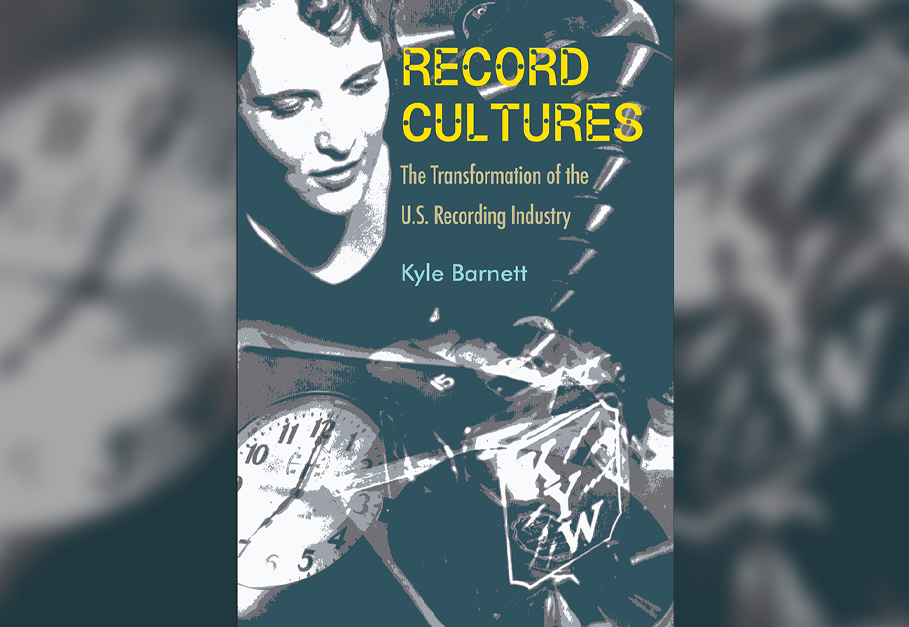
Dr. Kyle Barnett’s research interests include media history, cultural industries and
sound practices across media. Those interests came together in his new book, Record Cultures: The Transformation of the U.S. Recording Industry (University
of Michigan Press, February 2020).
Bellarmine University’s Department of Communication—where Barnett
is an associate professor and director of Graduate Studies—will celebrate the book
with a reception on Thursday, October 7.
In Record Cultures, Barnett takes an interdisciplinary look at recording-industry history, showing how
early commercial recording companies changed musical culture in the 1920s and 1930s
and linked it to other forms of media. As smaller record
labels began to turn out records in the genres that would become jazz, blues and country,
radio began broadcasting more recorded music in place of live performances. With the
end of silent movies, the film industry also began to replace film accompanists
with recorded sound. By the early 1930s, the recording industry had become a major
media industry, although it was tied to the radio and film industries. The relationships
between the three led to the first major media conglomerates in U.S. history. The
book, which will be of interest to scholars of popular music, media studies, sound
studies, American culture, and the history of film, television and radio, has been
well-received. Michele Hilmes of the University of Wisconsin-Madison wrote: “At
last, a scholarly study that integrates the history of phonography with radio and
film, to show how the interlocking operations of these key media sectors worked to
produce twentieth-century media culture. Solidly researched and full of colorful
details.” Record Cultures was a finalist for the Association for Recorded Sound Collections (ARSC) Award for
Excellence in Best Historical Research on Record Labels or General Recording Topics. Barnett’s
other publications include “Furniture Music: The Phonograph as Furniture” in the Journal
of Popular Music Studies; “The Selznick Studio, ‘Spellbound’ and the Marketing of
Film Music” in Music, Sound
and the Moving Image, and chapters in several book anthologies. He is a former co-editor
of the Velvet Light Trap, graduate editor and columnist for Flow, Antenna and In Media
Res. His undergraduate courses at Bellarmine include Media and Society; History of Broadcasting; Film and TV Studies;
The Film Musical; Popular Music and the Recording Industry; and Sound Studies; and
his graduate courses include Introduction to Media Studies and Cultural Industries.