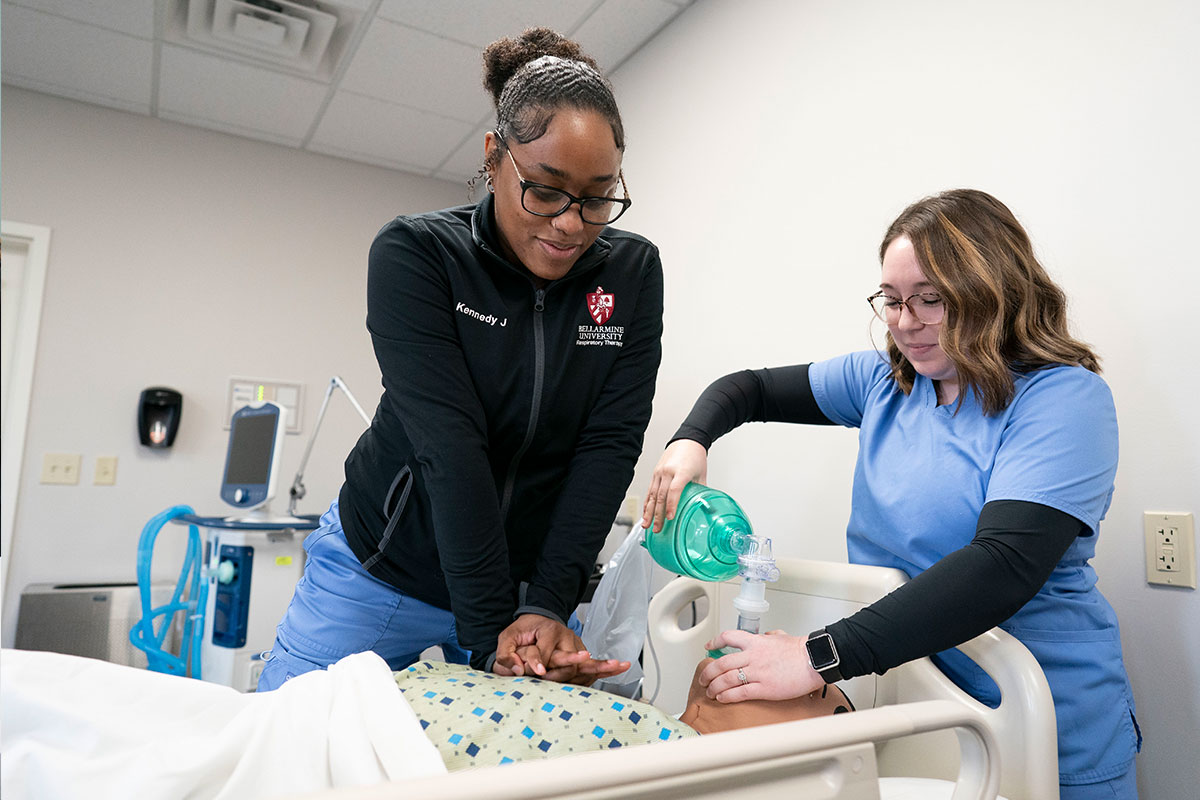
What is Respiratory Therapy?
Respiratory therapists are specialized healthcare practitioners with training and
expertise in the diagnosis, treatment, and management of cardiopulmonary diseases
in emergency, critical-care, and long-term care settings. Licensed and specialty board-credentialed,
they work together with critical-care physicians and nurses to develop treatment strategies.
What makes Bellarmine’s Respiratory Therapy program stand out?
Bellarmine’s Bachelor of Health Science in Respiratory Therapy was ranked the number
one respiratory therapy program in the nation by College Choice. Our program is one
of only a few in the U.S. to earn the COARC Distinguished RRT Credentialing Success
Award, reflecting our exceptional graduate outcomes and career placement rates. Our
students complete more than 700 clinical hours across diverse patient populations,
preparing them for advanced practice from day one.
The Student Perspective
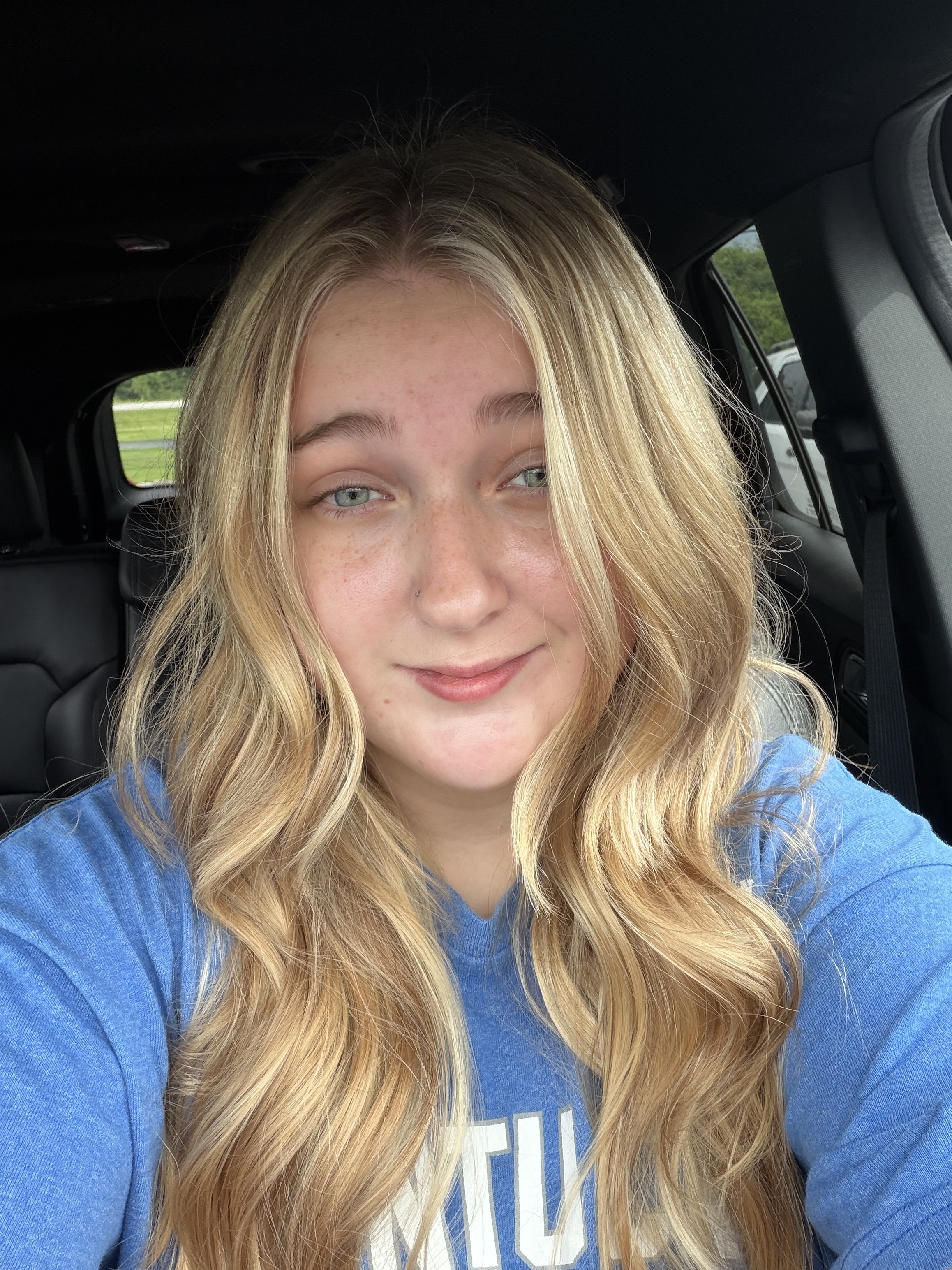 Savannah Atwood is a senior studying Respiratory Therapy. She initially became interested
in the field after observing how respiratory therapists had aided her grandparents.
After speaking with the directors of Bellarmine’s Respiratory Therapy program, Atwood
decided this was the right place for her to pursue her dream of helping people.
Savannah Atwood is a senior studying Respiratory Therapy. She initially became interested
in the field after observing how respiratory therapists had aided her grandparents.
After speaking with the directors of Bellarmine’s Respiratory Therapy program, Atwood
decided this was the right place for her to pursue her dream of helping people.
Here’s what Atwood had to say about her experience in Bellarmine’s Respiratory Therapy program.
Q: How does your experience in this program help you prepare for life after Bellarmine, both professionally and personally?
SA: Professionally it gives you the one-up because in Louisville a Bellarmine degree holds a lot of priority. Coming here, you're going to get the best education that you can and you are almost guaranteed to pass the exams, and pass your boards, and get your license.
And then, personally, just having the connections. Having the different connections to each hospital and being able to get in whenever and wherever [is helpful]. I currently have a student position at Baptist. And the way that they do their student positions is if you pass the exams and want to work there, then you're almost guaranteed a job there.
Q: What about Bellarmine’s Respiratory Therapy program has stood out to you?
SA: I think because of the smaller class sizes you're able to be more personable to your classmates and be friends with them and know more about their life. It does not matter if it’s respiratory therapy or life, we are right there for each other. It has honestly been the best thing for me. Just because you make connections very quickly, very easily.
Along with that, you know your professors. Most of the professors will let you text them, ask them questions, call them. Any issues that you have you can go straight to them, and they have no issue with helping you.
Q: How would you describe the learning environment at Bellarmine and in this department?
SA: I feel that at Bellarmine in general the professors give you the opportunity to make mistakes and grow from them and learn why you're doing it wrong and how to fix it. In Respiratory Therapy specifically, [the professors] will come in extra, they will set up study groups for you, they can give you extra study guides, extra worksheets. They will do anything and everything in their power that you need them to do. You just have to tell them.
Q: Because Bellarmine is a liberal arts school you take a lot of classes outside of your major. What's been your experience with that, and has it impacted your approach to Respiratory Therapy?
SA: It gives you a broader way of looking at things. You don't have just one way of coming and helping patients. You [can better understand] what the patient may be going through or be able to be personable with the patient. You might not know what it feels like to be them, but you have an understanding behind everything and are able to understand where they're coming from, even though I don't know how that feels.
Q: A big part of the Respiratory Therapy program is the clinical setting. Can you describe your experience with that?
SA: Every hospital is very nice, very welcoming. For the most part, we switch hospitals every week or every clinical, depending on how many times you go. You get the perspective of how Baptist Hospital does it versus how Norton’s Hospital does it versus how University of Louisville Hospital does it, and you get all the different views on how it could be done. And they're all right, they’re just different ways of looking at everything.
Q: What does that do for your learning progress?
SA: I feel like it helps speed it up and makes everything click better because you're hearing it in the classroom and then you're going to clinical and you're actually doing it. You're doing the hands-on portion to make it stick in your head and getting the experience to know, hey, if this isn't working, do this. If that's not working, we can do this, this, and this. You’re learning problem solving skills.
Q: How does that affect your confidence with performing the job after you graduate?
SA: I feel like it majorly boosts your confidence because when you're doing it in clinical, you have someone right there with you and they're not going to let you fail when you're doing it in clinical. It gives you that confidence of saying, well I know what I'm doing then. And you just get that extra little confidence boost to go out after school to be able to do it.
Q: What would you say to a prospective student who's interested in studying Respiratory Therapy at Bellarmine?
SA: I would say do it. It has truly changed my life. And just knowing that you always
have people in your corner, no matter where you go. You can always call your professors,
no matter how far out of school you've been. Even if it's been ten years, you can
still call them and they'll answer and they'll help you. They'll give you advice,
and they're just so welcoming and want to teach it and want you to be able to know
it.
The Faculty Perspective
 Shannon Terry, MSM, RRT-NPS, RRT-ACCS, is the program director for Respiratory Therapy
as well as an instructor. Bellarmine’s Respiratory Therapy program is the only Respiratory
Therapy program offering a bachelor’s in health science (BHS) degree in the Louisville
area. Terry says respiratory therapists with a bachelor’s degree are highly sought
after and this unique BHS degree offers students a solid academic foundation to begin
their career.
Shannon Terry, MSM, RRT-NPS, RRT-ACCS, is the program director for Respiratory Therapy
as well as an instructor. Bellarmine’s Respiratory Therapy program is the only Respiratory
Therapy program offering a bachelor’s in health science (BHS) degree in the Louisville
area. Terry says respiratory therapists with a bachelor’s degree are highly sought
after and this unique BHS degree offers students a solid academic foundation to begin
their career.
Terry adds that Bellarmine's campus atmosphere and close-knit community are benefits of living on campus or attending campus activities, and Bellarmine’s small class sizes allow students to get more personalized instruction.
“Respiratory Therapy instructors are available for one-on-one instruction and offer open laboratory time for those students who need additional time,” Terry says. “Instructors keep in mind that students have different learning styles and attempt to deliver the material both by lecture and interactive demonstrations.”
Respiratory Therapy instructors combine in-class lecture and laboratory opportunities with clinical experiences to ensure post-graduate clinical preparedness. This is one reason the program experienced a 100% pass rate on the National Board for Respiratory Care (NBRC) credentialing exam (high-cut TMC) in 2025 and 2026.
“We take pride in educating our students and preparing our graduates in starting their career in Respiratory Therapy,” Terry says. “Schedule a campus tour or a meet-and-greet with Respiratory Therapy faculty and see for yourself what our program has to offer. We have enthusiastic graduates who are willing to meet prospective or current students to share their experiences.”
Visit the Respiratory Therapy program page for more information including program highlights, career opportunities, and contact information if you’d like to get in touch with the department.