 But given his commitment to ecumenical dialogue, Merton’s Catholic identity has been
regularly questioned since his death in 1968. Some go so far as to label him a rebel
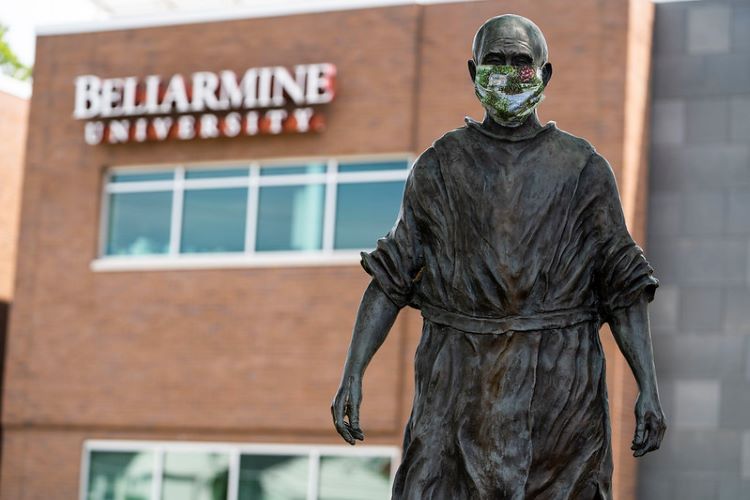
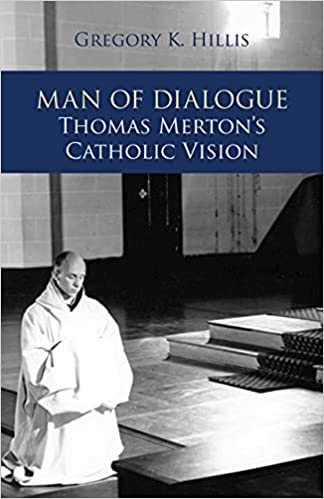
whose ideas went against the church. In his new book, Man of Dialogue: Thomas Merton’s Catholic Vision, Dr. Gregory Hillis, a professor of Theology at Bellarmine University, tackles the question “How Catholic was Thomas Merton?”
His contention is that Merton did not negate his own Catholicism in order to engage
with non-Catholic traditions. “In order to understand Merton,” he writes, “we need
to understand more thoroughly how his thought was intertwined with his identity as
a Catholic priest and emerged out of a thorough immersion in the church’s liturgical,
theological, and spiritual tradition.” Merton is of particular importance at Bellarmine,
which is home to the Thomas Merton Center, the repository of his manuscripts, letters,
journals, tapes, drawings, photographs and memorabilia. Hillis, who teaches an undergraduate
class on Merton, is a member of the International Thomas Merton Society and has published
articles and essays on Merton in Cistercian Studies Quarterly, The Merton Annual,
and The Merton Seasonal, as well as in America Magazine and The Tablet. In reviewing
Man of Dialogue, James Martin, author of Learning to Pray and Jesus: A Pilgrimage, writes: “Greg Hillis's beautifully written and expertly researched book restores
Merton's Catholicism to where it should be in studies of his remarkable life: at the
center.”
But given his commitment to ecumenical dialogue, Merton’s Catholic identity has been
regularly questioned since his death in 1968. Some go so far as to label him a rebel
whose ideas went against the church. In his new book, Man of Dialogue: Thomas Merton’s Catholic Vision, Dr. Gregory Hillis, a professor of Theology at Bellarmine University, tackles the question “How Catholic was Thomas Merton?”
His contention is that Merton did not negate his own Catholicism in order to engage
with non-Catholic traditions. “In order to understand Merton,” he writes, “we need
to understand more thoroughly how his thought was intertwined with his identity as
a Catholic priest and emerged out of a thorough immersion in the church’s liturgical,
theological, and spiritual tradition.” Merton is of particular importance at Bellarmine,
which is home to the Thomas Merton Center, the repository of his manuscripts, letters,
journals, tapes, drawings, photographs and memorabilia. Hillis, who teaches an undergraduate
class on Merton, is a member of the International Thomas Merton Society and has published
articles and essays on Merton in Cistercian Studies Quarterly, The Merton Annual,
and The Merton Seasonal, as well as in America Magazine and The Tablet. In reviewing
Man of Dialogue, James Martin, author of Learning to Pray and Jesus: A Pilgrimage, writes: “Greg Hillis's beautifully written and expertly researched book restores
Merton's Catholicism to where it should be in studies of his remarkable life: at the
center.”
Man of Dialogue is published by Liturgical Press.