By John James
For Wendell
Algae pushes north and further north. The plankton follows, and with it, a biome of multifarious sea creatures: microbes, mollusks. Charismatic megafauna. All of them now breed at higher latitude, which means the things that bred at that higher latitude now breed elsewhere and elsewhere eat. I linger at the end, the edge of it. I tread the precipice of the abyss. It is Friday, early, and my son is newly born. In the dark he coos and grunts. The slowing stream of morning news murmurs in his ear. It cradles him in a sound, like some object of history. Outside, berry brambles glisten in an almost absent wind, here
and there starting up
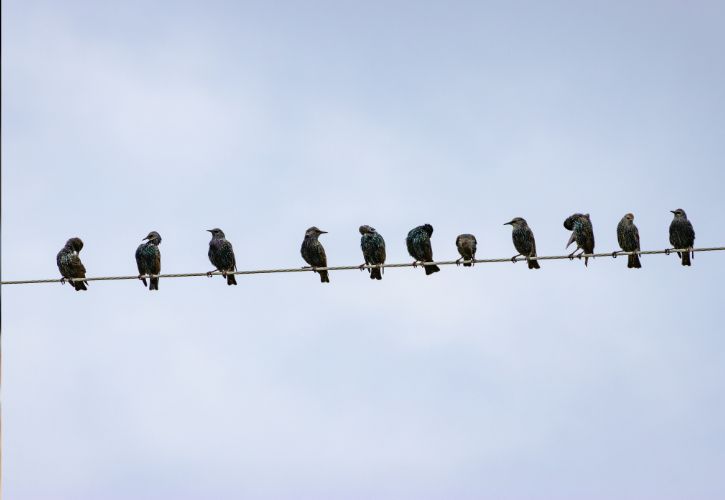
to toss pollen from a node.The starlings, always starlings, tighten like fists along a strand of telephone wire. My son, he’s sucking on my finger. He’s looking up at me with two bulbous slate gray eyes that hardly let me scrawl these words. I think of the beluga whale stitched on his shirt, the fishy taste of the milk it feeds its own young, born in warmer waters, which push them toward the pole. Here, sun pummels the windows and the exposed planks of the house, summons tiny seedlings from the mud. It desiccates the herbs left hanging on the porch. My son writhes in my arm, a single muscle almost, slacking and contracting as he throws another wail. The end, it’s moving toward us. His future’s set in an unreadable script. Through glass I watch starlings shuffle and depart, displace
grubworms from the dirt.
My neighbor shavesa bristlecone pine toppled in the morning heat. He drops the limbs in piles and soaks the wood in flame. Somewhere in the distance plankton colonies dissolve. Whales go with them. The oak trees burn in Spain. My son rolls his eyes over curtains and patterned sheets, gazes at the azure light of the TV. At his lips, a milky bubble. He moves his tiny head. He dozes to the changeless whir of the machine, gogging, I presume, at its slow and secret ministry. John James, who teaches creative writing at Bellarmine, is the author of The Milk Hours (Milkweed, 2019), selected by Henri Cole for the Max Ritvo Poetry Prize, as well as two chapbooks, most recently Winter, Glossolalia (Black Spring, 2022). His poems appear in Boston Review, Kenyon Review, Gulf Coast, Best American Poetry and elsewhere. This poem, "Lullaby," received the Treehouse Climate Action Poem Prize, issued by the Academy of American Poets. James is completing his Ph.D. in English at UC Berkeley.