A Bellarmine University senior whose dream is to help unify the Korean peninsula won
a highly selective fellowship designed to prepare future leaders to meet the geopolitical
challenges of the 21st century.
Mary Wurtz of Crestview Hills, Ky., is scheduled to head to China in August for a
year at Tsinghua University in Beijing as one of 145 Schwarzman Scholars (although
the start date may be delayed by the coronavirus outbreak). The program, now in its
fifth year, was inspired by the Rhodes Scholarship.
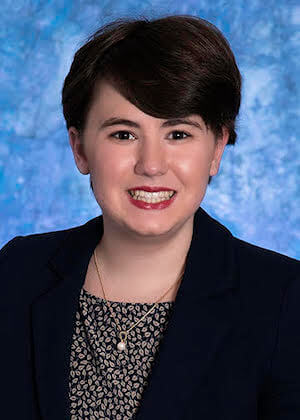
Wurtz, who will graduate from Bellarmine in May with degrees in foreign languages
& international studies (FLIS) and theology, and a minor in refugee studies, will
earn a master’s degree in global affairs during the one-year program, which has a
curriculum devised by academic leaders from universities such as Harvard, Yale, Princeton,
and Oxford.
“I hope that I can be a bridge of understanding for people between these two countries
that have a lot of tension about them right now,” she said.
The 2021 Schwarzman Scholars were selected from more than 4,700 applicants after a
rigorous application and interview process and represent 41 countries and 108 universities.
They include a five-time Carnegie Hall pianist; a machinist and welder who built shelters
for more than 26,000 earthquake victims in Nepal; one of the BBC’s Most Inspiring
Women of the Year; and the CEO of a company from Syria that provides 3D-printed prosthetics
to refugees.
“I am inspired by these remarkable, accomplished and dynamic young individuals who
will be joining Schwarzman Scholars at a time when its mission is more important than
ever,” Stephen A. Schwarzman, founding trustee of Schwarzman Scholars, said in a news
release. “I am excited to see … how they will apply themselves as people of consequence
in their generation.”
Wurtz is part of a select group of students who were awarded full-ride, four-year
scholarships to Bellarmine as Bellarmine Scholars. She was twice elected by her peers
to serve on the Honors Student Advisory Board, including a term as president in 2017-18
during which she helped establish new service partnerships with local non-profits
and co-authored a bill that secured funding for undergraduate research. As an intern
with the World Affairs Council of Kentucky and Southern Indiana, she wrote a proposal
for an NGO that brought more than a dozen English as a Second Language teachers from
other countries to Louisville for professional development.
In March 2019, she was one of 16 speakers at Bellarmine’s inaugural TEDx event; her
topic was “A Second Soul: Love as the World's Lingua Franca.”
“Mary is a shining example of the well-roundedness that liberal arts institutions
strive to inculcate in their students, inclusive of the level of deep thinking so
vital to ethical leadership,” Dr. Justin Klassen, chair of Bellarmine’s Liberal Studies
program, wrote in his letter nominating Wurtz as a Schwarzman Scholar.
Wurtz said she was drawn to Bellarmine by the opportunity to do research through the
Honors Program and by the FLIS major, in which students master a foreign language
while also developing global competency through study-abroad experiences and a diverse
selection of courses such as international relations, human geography, world religions
and intercultural communications.
She speaks Spanish fluently—she was interpreting for Spanish-speaking clients to Bellarmine’s
free physical therapy clinic before a recent interview—has taken Japanese courses
at Bellarmine and has done self-study of Korean.
She has been interested in the Korean conflict since she befriended South Korean students
at her high school in Northern Kentucky, which had a large international population.
“Being friends with people from South Korea made me realize what a distorted view
of North Korea we have here,” she said. “When I’ve been on interviews, a question
that I’m asked a lot is, if you could try to get across one thing about North Korea
to people, what would you want them to know? And I always say, ‘There are 20 million
people living in North Korea, and they’re not all named Kim Jung-on.’”
Egregious human-rights violations are certainly occurring on the peninsula, she said,
“but it’s not all gloom and doom. There are people my age who have crushes, and they
like watching TV and movies, and they have dreams about what they want to do when
they grow up—you know, they’re just normal 22-year-olds like me. That’s what got me
first interested in working towards peace on the peninsula—with the caveat that I’m
an American and my country helped make this problem. I’m not trying to be the savior,
but it’s important to me.”
Her “big, crazy, pie-in-the-sky dream” would be to be the first ambassador to a united
Korea, she said. But in the meantime, “I would really like to get into policy research.
… I’d love to be someone who influences policy for a while before I have the résumé
to run for office [in Kentucky] myself.”
Dr. Nelson López, chair of the Department of Global Languages and Cultures, says she
is “someone to watch.”
“What has made Mary so successful is her drive and determination to embody our Bellarmine
motto: ‘For the love of truth’—not loving the truth we want to hear; rather, the truth
we seek, the truth that will lead us to fairness and justice for all,” he said. “She
argues marvelously both in English and Spanish for these and other causes. It may
sound pretty idealistic, but in Mary I see her actions grounded in reality, infused
by her wit, her keen mind, and humble candor. Her success speaks volumes.”
Wurtz is quick to credit her professors as well. “I’ve always found professors who
wanted to help me find challenges and who have sent me stuff: ‘Oh, have you heard
about this,’ or ‘Oh, you should definitely apply for this.’ The faculty are so willing
to go above and beyond to make your Bellarmine experience your Bellarmine experience,
and not anybody else’s. You get these hands-on experiences and have people willing
to help you do whatever it takes to succeed.”
As for her goals in Beijing, she says she hope to gain an “in-depth, insider” understanding
of China.
“Like North Korea, it’s one of these places you hear about: ‘The Chinese this, the
Chinese that,’ and it’s like, there’s a billion human people living there who fall
in love, and who go to school, and who have passions and dreams and aspirations for
their future. They’re complex people with complex lives, just like me and you,” she
said. “So I really hope that I can learn as much as I can about the different political
and social issues there and bring that back to the United States so that when I hear
someone go, ‘Man, the Chinese are going to beat us in this,’ I can go, ‘Well, the
Chinese are a billion people, and they’re actually kind of interesting—let me tell
you a bit about their culture.’”