Sustainability at Bellarmine
Creating a greener Bellarmine, unlocking a greener world.
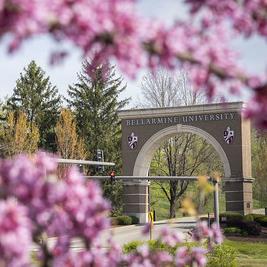 In the inclusive spirit of Thomas Merton, our core values of social responsibility
and stewardship at Bellarmine call us to honor the interconnectedness of life and
the solidarity of the human spirit.
In the inclusive spirit of Thomas Merton, our core values of social responsibility
and stewardship at Bellarmine call us to honor the interconnectedness of life and
the solidarity of the human spirit.
Inspired by the Laudato Si' Action Platform, Bellarmine University is committed to caring for our common home. Guided by its action plan, we integrate ecological stewardship into education, research, and operations, addressing the cry of the Earth and the poor. Together, we strive for sustainability, social justice, and hope for future generations.
Bellarmine is proud to have earned a bronze rating from the Association for the Advancemenent of Sustainability in Higher Education's (AASHE) Sustainability Tracking, Assessment & Rating System (STARS) for 2025-2028. This designation acknowledges Bellarmine's commitment to long-term sustainability goals and ongoing work to achieve sustainable practices across our campus footprint and beyond.
Mission
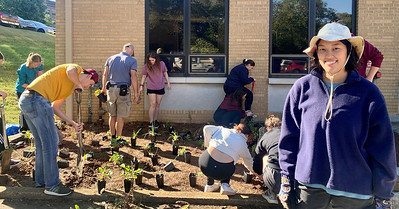 Following Catholic Social Teachings, the Sustainability Committee is cross-functional
team of students, faculty, and staff working in collaboration to create a campus-wide
culture of sustainability at Bellarmine to reduce our ecological footprint, save resources,
and support the greater community in which we live.
Following Catholic Social Teachings, the Sustainability Committee is cross-functional
team of students, faculty, and staff working in collaboration to create a campus-wide
culture of sustainability at Bellarmine to reduce our ecological footprint, save resources,
and support the greater community in which we live.
Sustainability Blog
Our blog posts focus on issues affecting the Bellarmine community, aiming to raise awareness, encourage engagement, and invite participation. Our upcoming post highlights the critical topic of recycling and explores how Bellarmine can enhance its effectiveness in this area.
Join us on a journey through our blog, where we delve into key sustainability topics shaping our campus and community.
Sustainability Blog
Sustainability on Campus
Pollinators and Biodiversity
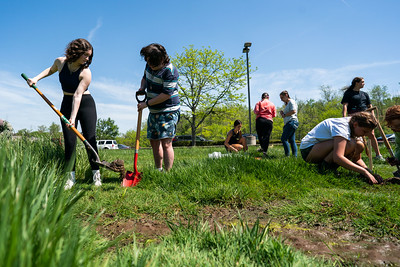
Our bee hives at the Bellarmine Farm produce the best local honey around! We are a certified member of the Xerces Society Bee Campus USA program for our support of pollinators.
Our pollinator gardens outside of Newman Hall and at the Bellarmine Farm provide habitat for butterflies, bees, and birds
Our rain garden of native plants in front of Allen Hall retains storm water, reduces fertilizers from getting into our waterways, and provides habitat for fish, frogs, pollinators, and other organisms.
Regenerative Agriculture
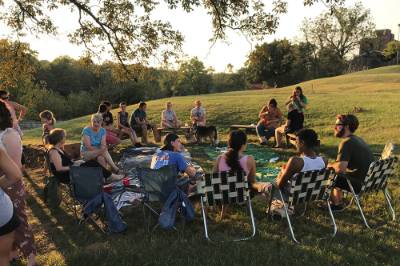
The Bellarmine Farm and orchard is a community garden and demonstration area for regenerative agricultural practices including raised beds, cold frames, permaculture, and composting.
Our outdoor classroom is available for class-based outdoor gathering, and our plots are available for experimental gardening, exploration of nutrition, and other class activities in an outdoor learning environment. We also maintain two pollinator gardens and an apple and pear orchard, where the Bellarmine Beekeeping Club maintains our campus beehives.
Tree Canopy
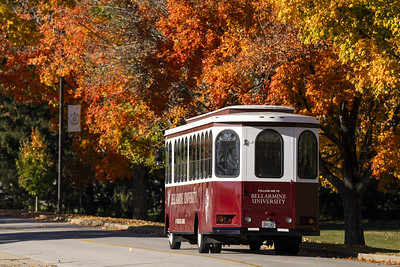
Bellarmine’s campus showcases beautiful native trees that provide shade and cooling and is a certified member of the Arbor Day Foundation’s Tree Campus USA program. The urban heat island effect is of concern in Louisville, and trees are one of the best ways to combat the heat island effect.
Sustainable Campus Infrastructure
EV Charging Station
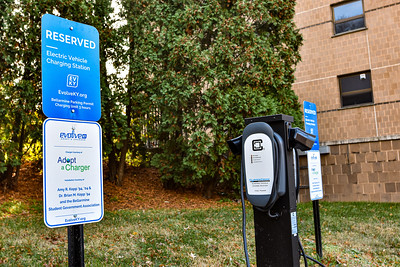
Our electric vehicle charging station near Miles Hall can accommodate two vehicles at a time, and our Facilities staff utilizes electric-powered gator vehicles.
Geothermal
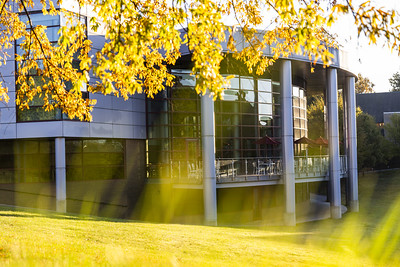
Our geothermal system consists of 88 wells, each 500 feet deep each, that serve as the heating and cooling system for the George G. Brown Center.
Lighting Improvements and Energy Management
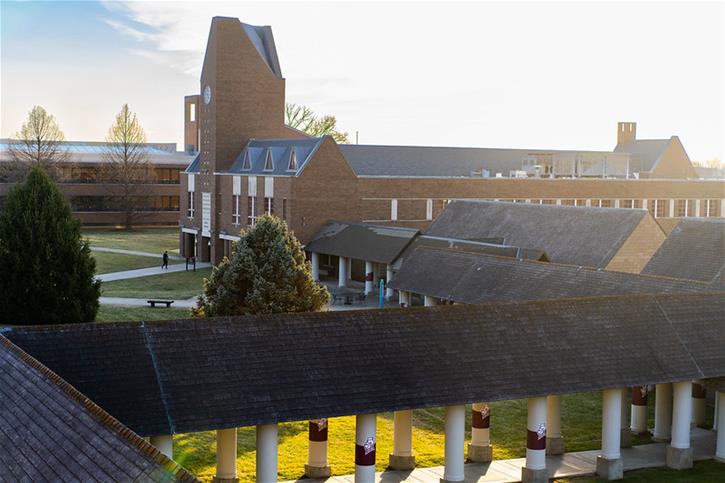 Our LED lighting on the Quad provides 3.5x the light of the replaced system at one-third
of the electricity. Our Energy Management System enables facilities to reduce energy
use based on building and room occupancy. In some locations, we utilize off-grid infrastructure,
such as a self-charging automatic door and a solar- and wind-powered emergency phone
station.
Our LED lighting on the Quad provides 3.5x the light of the replaced system at one-third
of the electricity. Our Energy Management System enables facilities to reduce energy
use based on building and room occupancy. In some locations, we utilize off-grid infrastructure,
such as a self-charging automatic door and a solar- and wind-powered emergency phone
station.
Our electric vehicle charging station near Miles Hall can accommodate two vehicles at a time, and our Facilities staff utilize electric-powered gator vehicles. Our geothermal system consists of 88 wells, each 500 feet deep each, that serve the George G. Brown Center. Our LED lighting on the Quad provides 3.5x the light of the replaced system at one-third of the electricity. Our Energy Management System enables facilities to reduce energy use based on building and room occupancy. In some locations, we utilize off-grid infrastructure, such as a self-charging automatic door and a solar- and wind-powered emergency phone station. Bicycles can be rented from our bicycle library located near the SURF Center.
The six, 500-gallon tanks in our rainwater reclamation system in the George G. Brown Center supply all of the water to the dual-flush toilets in the building, diverting excess stormwater from waterways. Our water-bottle filling stations located throughout campus reduce single-use plastics.
Our rain garden of native plants in front of Allen Hall retains storm water, reduces fertilizers from getting into our waterways, and provides habitat for pollinators. Read more about our rain garden here.
The Bellarmine Farm behind Allen Hall operated in collaboration between Facilities and the Environmental Studies Department is a demonstration area for agricultural practices including raised beds, cold frames, permaculture, composting, traditional gardening, and an orchard. The Farm also provides an outdoor classroom space. Our Campus Greenhouse is operated by the Biology Department in service of the Plant Diversity course and student and faculty research.
We have a robust recycling program on campus with prevalent recycling and landfill bins. We support the use of green cleaning practices through a green product requirement with our custodial contractor. Our dining services use tray-less dining to reduce water and food waste, local sourcing of dairy products and other local food distributors as part of the Better Tomorrow Plan, composting of food waste, and 100% recycled-content napkins.
The urban heat island effect is of concern in Louisville, and trees are one of the
best ways to combat the heat island effect. Bellarmine’s campus showcases beautiful
native trees that provide shade and cooling. Bellarmine is a certified member of the
Arbor Day Foundation’s Tree Campus program. We also have a Campus Tree Inventory.
On Campus and Beyond
Academics
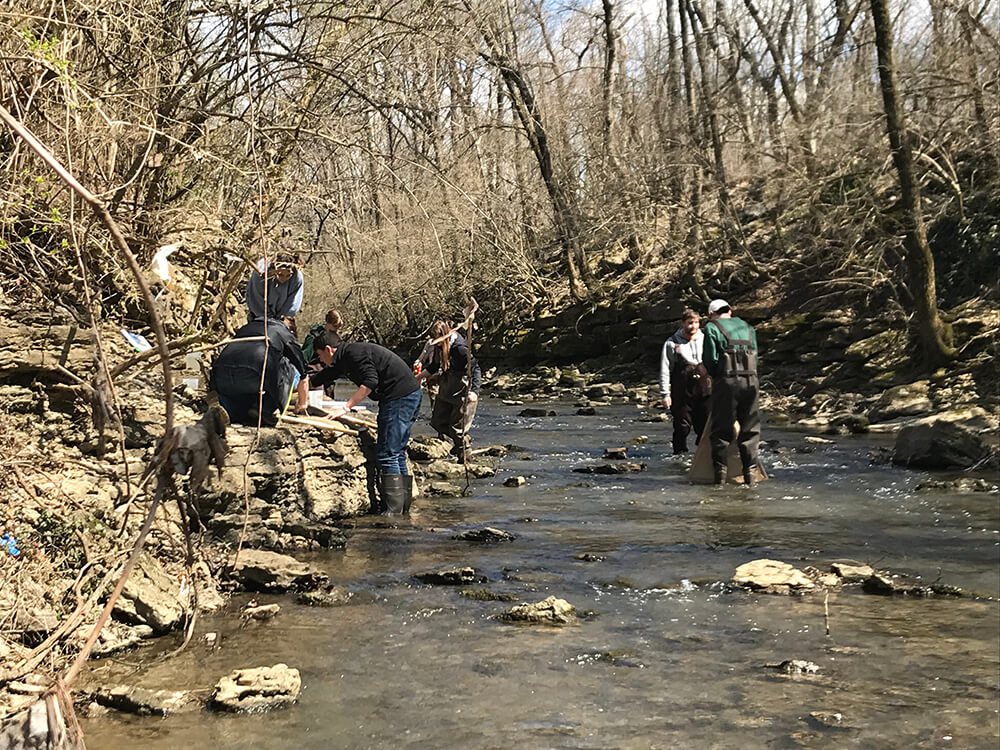
Bellarmine offers a Bachelor of Science degree in Environmental Science, a Bachelor of Arts degree in Environmental Justice and Sustainability, and a minor in Environmental Studies. The Department of Environmental Studies offers courses ranging from general education natural science courses in Environmental Science to technical skill-building in our Geographic Information Systems and Sustainable Development courses to engagement with social justice issues in our Environmental Justice course. Our Paleontology classes help students understand the impacts of past climate changes on the Earth, and our Aquatic Ecosystems classes teach effects of pollution on our aquatic resources. Multiple other departments also offer courses related to the environment and sustainability, such as Anthropology of Food; Theology, Nature, and Environmental Responsibility; and Global Climate: It’s Up to Us. Students majoring in one of the environmental majors participate in an internship related to their career goals and aspirations, as well.
Co-Curricular
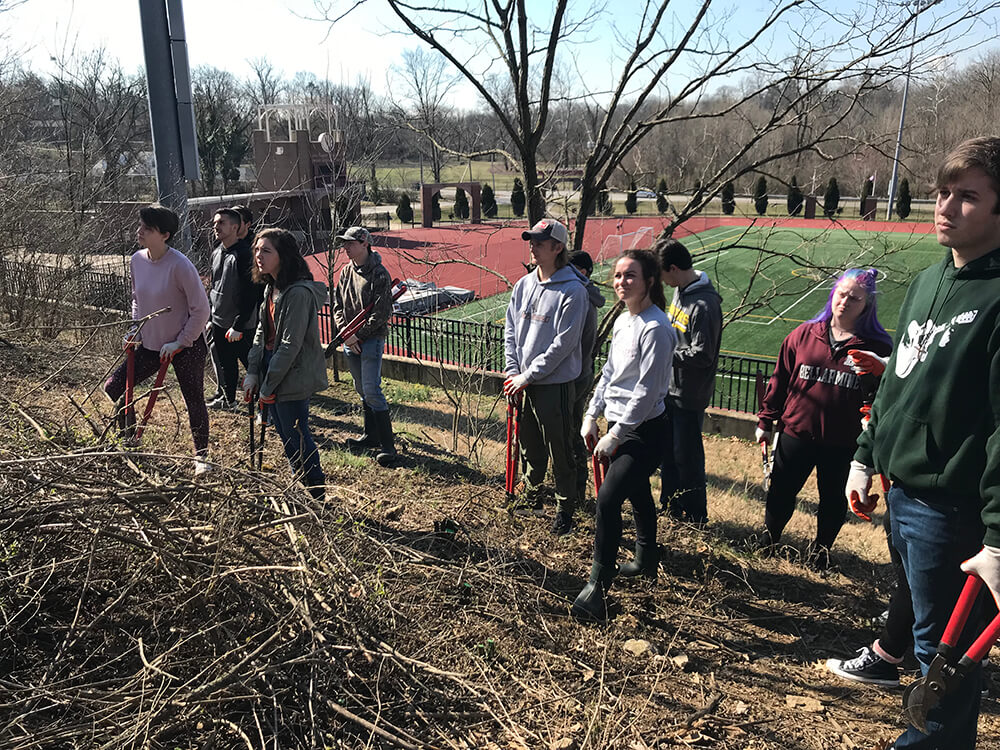
The Terra Learning Community (TLC) focuses on the theme “Sustainability: From Words to Action.” The community is open to students of any major and is designed for students that have a strong interest in the issues of sustainability. The students in the TLC will support each other in the courses they take, in environmentally conscious living, civic engagement benefiting the greater community and activities that align with the theme of TLC, such as a visit to a farm-to-table restaurant, projects in the Bellarmine garden, and outdoor activities.
Registered student organizations related to sustainability and environmental issues provide opportunities for students to get involved. Some examples are the Green Knights, Food Advocacy Network, and the Vegan and Vegetarian Outreach clubs. Students can also get involved in the Student Government Association’s Environmental Committee and the campus-wide Sustainability Committee.
Each year, Bellarmine hosts various campus environmental programming events around the Feast of St. Francis, Earth Day, and Arbor Day, and we host two speakers each year in our Sustainability Series.
Community Engagement
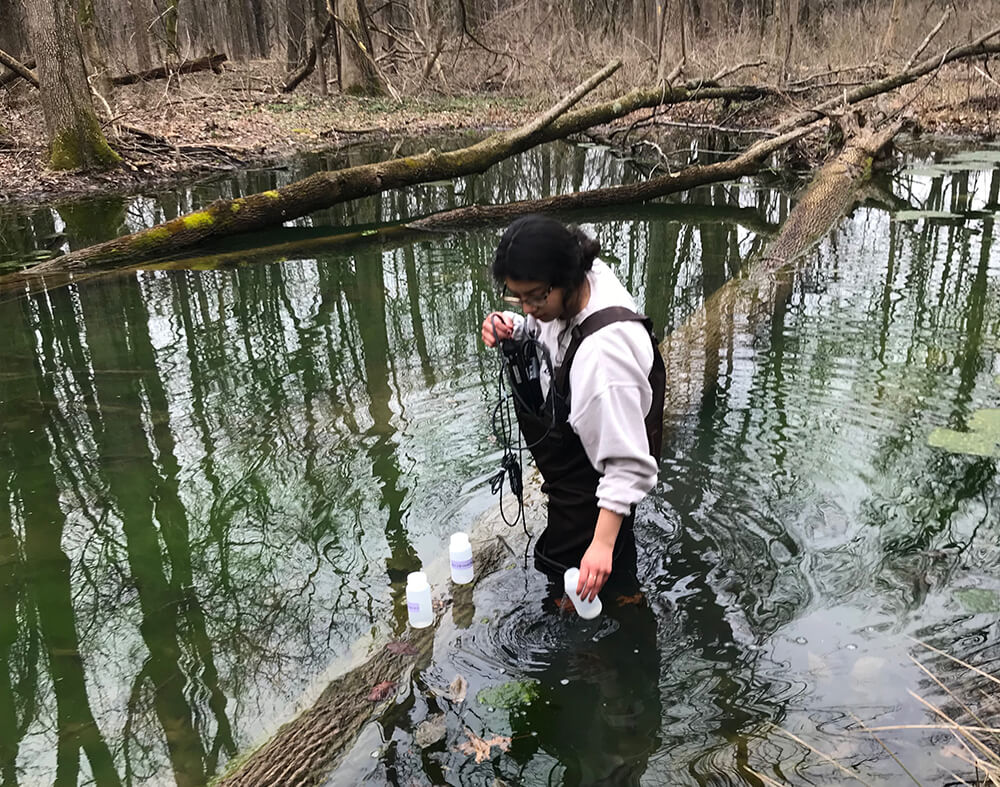
Various classes and groups on campus engage with the greater Louisville community in meaningful ways to help the environment, resulting in recognition as a Green Spirit Partner Community member through Kentucky Interfaith Power & Light in 2020 and 2021. Faculty and students in the Department of Environmental Studies support wetland restoration research at the Passionist Earth & Spirit Center. Students also work with Olmsted Parks Conservancy to remove invasive species from campus and local parks. Students in Environmental Science courses participate in citizen science data collection with Salt River Watershed Watch to help with data-informed watershed management.
During the summer, Bellarmine offers a summer camp for kids though Camp Valor called: “A Week in the Life of an Environmental Scientist.”