
What is Sociology & Anthropology?
The Sociology & Anthropology major emphasizes a combination of rigorous classroom preparation in sociological theory and research with hands-on experience in the real world. The program also embraces a strong social justice philosophy and encourages student activism.
In addition to applied and experiential classes which give practical and hands-on knowledge, selected humanities courses in philosophy, psychology, literature, and drama provide interpretations of societal issues that can only be found in a liberal arts education.
What makes Bellarmine’s approach to Sociology & Anthropology stand out?
Bellarmine’s program combines innovative teaching approaches with a variety of courses and a strong emphasis on experiential learning. Professors devote considerable creative effort to finding practical applications for the knowledge students gain in sociology and anthropology, particularly by connecting that knowledge to issues of race, inequality, identity, and power as they are experienced in our communities.
Having a background in both disciplines broadens students' exposure to fundamental theories and research methods in the social sciences, providing a strong foundation for both postgraduate study and employment. The combination of classroom instruction and experiences outside the classroom, such as internships, service activities, study abroad, and community-engaged coursework, helps students make important connections between abstract knowledge and real-life experiences, preparing them to pursue advanced study or enter the job market after graduation. For students preparing to enter the workforce, we place particular emphasis on internships, which allow them to explore career opportunities, build professional networks, develop their skills, and gain relevant work experience before graduation.
The Student Perspective
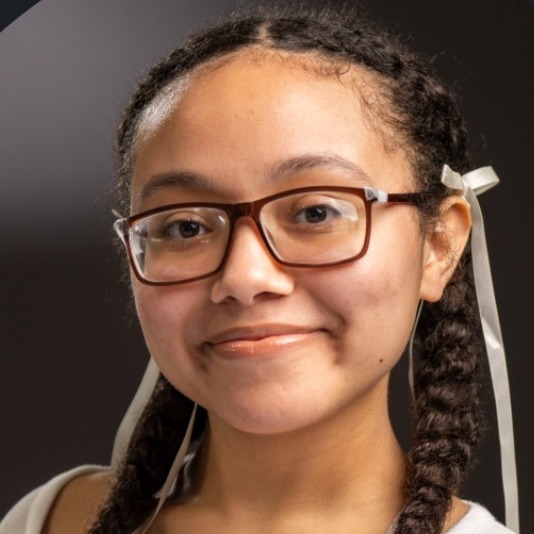 Remani Fogle is a senior double-majoring in Sociology & Anthropology, with a focus
in Sociology, and Communication, with a minor in Creative Writing. After college,
she is interested in becoming a journalist.
Q: What made you want to study Sociology?
RF: My sophomore year I went on a spring break trip with Alternative Spring Break, which is a program here at Bellarmine. We went to St. Louis and we focused on housing. We went to shelters, we helped clean up, and we learned from Saint Louis University professors about housing, and it just made me more interested and made me want to get involved with the Sociology program because I knew that it focuses on the world and helping people.
Q: How has your experience in this program helped you prepare for life after Bellarmine?
RF: In a lot of ways. It's helped me learn a lot about the world, a lot about what people are dealing with. Before coming to college, before being part of this Sociology program, I didn't really know a lot about what was happening in the world and what people were going through. In my classes with Dr. Hutchins, his Stories Across Culture class, we talk a lot about what people are going through, like with immigration and different indigenous people across the world. And I would have never known about that if I hadn't taken these classes. It's helped expand my worldview, which I feel would help in journalism because it makes me empathize with people. It'll help me communicate better and be able to understand people's situations.
Q: What has stood out to you most about this program?
RF: How passionate the professors are. You can tell that they really care about what they're talking about and their passion makes me want to care more.
Q: What kind of academic support do students get in this major?
RF: Dr. Hutchins and Dr. Lambert-Swain are amazing support systems. I was able to get my internship with Louisville Metro because of Dr. Lambert-Swain. And Dr. Hutchins was a journalist, so talking with him and how this major could correlate with journalism is really helpful. I go to their office hours all the time. They have so many connections and they know so much about a lot of different things.
Q: What has your internship experience been like?
RF: I'm interning with Louisville Metro Government with the Home for Good Initiative. We're trying to house 200 homeless people. I just started last week, so right now I'm just learning about the program and what they do. We're trying to make sure people have a place to stay, that's the main priority, and then we have wraparound services that go around that. So, if they need mental health services, behavioral health services, food, places to go for community, we offer that. My role as an intern is kind of like a peer mentor, so I’m going to help them get resources, access to the community, and bring food if they need it. Just be there and be someone they can confide in.
Q: Have you been involved in any extracurricular activities?
RF: I am the PR and fundraising co-chair for Alternative Spring Break. This year we're going back to St. Louis, and I'm going to help lead that trip. We're going to focus on housing, food insecurity, and education. I'm really excited, and since I've had more courses in Sociology & Anthropology, I feel like I'll be able to apply that more to this trip and be able to help the students going understand what we're trying to do. We volunteer with different community partners there to help out and learn more about those issues.
Q: What are your relationships like with your peers in this major?
RF: I love the small class sizes, you definitely feel more connected to the professor and to the students as well. I can turn around and just talk to everyone and they'll be able to hear me, it's really nice. It feels like a community where we all know each other, and you can hear everyone's perspectives. Everyone speaks up and talks, which I feel is really important. We're not just hearing from the professor, we're hearing from other students and their views on the subject.
Q: How would you describe the learning environment at Bellarmine?
RF: I really like it. The small class sizes and being connected with all the students and the faculty has been really nice. All the faculty care about what they're doing. And the Career Center advisors have helped me a lot. I feel like at other universities it may not be the same because the advisors here know you by your name. They know what you're interested in. I say hi to them all the time and they know me and it feels very personal.
Q: What would you say to a prospective student who is considering studying Sociology at Bellarmine?
RF: They should definitely study this here because I feel like it's really important just in life, even if you don't want to do something in Sociology. I feel like it's important to learn more about what's going on in the world because it can help in every field, being able to empathize with people and being able to understand what they're going through. This major could apply to multiple different things. I want to be a journalist but I'm still taking Sociology and it will have a big impact on my career.
Q: Do you feel like this major has helped you find a calling or a purpose or a direction for life after college?
RF: Oh, definitely. I feel like I've always wanted to be a writer since I was younger, but I feel like Sociology has really put it into perspective that I want to work with the community and I want to make sure people's stories are told and information is getting out there. That's important. Being part of this program has really made me realize how important good journalism is.
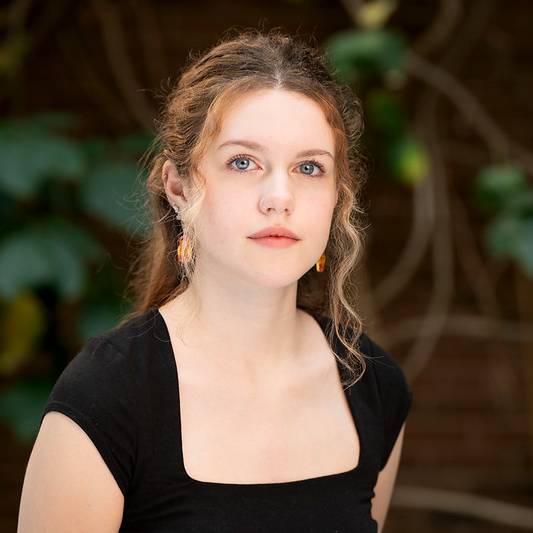 Cheyenne Grogean is a senior double-majoring in Sociology & Anthropology and Communication.
Grogean discovered Sociology & Anthropology after taking Intro to Anthropology as
an elective. She initially chose to add it as a minor, but as her interest in the
subject deepend she decided to make it her second major.
Here's what Grogean had to say about her experience in the program:
Q: What has stood out to you most about this major?
CG: The professors are really great, but also community engagement is such a quintessential part of the major. Not just community engagement with our immediate Louisville, but also how what you're learning is impacting what you're doing in your own life.
I’m doing the Honors capstone with Dr. Hutchins. We're building a class for freshmen and the whole premise of the course is teaching how we figure out how to talk to each other in our current climate and how we figure out how to do that in a way that's actually meaningful and respectful. I think that's a pretty stellar part about [this major], is that it doesn't feel like I'm just reading from a textbook and then showing up to class and talking about it. It's about actually understanding that these are real things that are really happening to people, so it's very engaged. The professors do a really, really great job of not only teaching the material, but making it interesting and easy to apply to your actual life.
Q: What are the relationships with your peers and professors like in this major?
CG: Every professor I've had has been really, really stellar. You get to know them in a smaller class setting. If you're in a class with 12 people, you're not going to be able to sit in the back and hide as much, especially in a class like these where so much of the class is centered on learning about the human experience or identity. You have to be engaged with the professor and the materials, and the professors are not only knowledgeable but genuinely passionate about what they're doing and wanting all of us to succeed. I think if you show as much enthusiasm for the class as they show for teaching it, then you'll get along just fine.
Q: How do the small class sizes influence your educational experience?
CG: I really like it. That was one of the main reasons I picked Bellarmine. The classes are seminar style, where interaction is part of what you're doing in lecture. It's not just someone talking at you for an hour, you have to be engaged. A big part of that is the people you're in class with. Being in a smaller class is nice because I feel like I can engage with everybody there.
Also, there's a pretty good blend of people who are in this major and then people who are just taking [a class] as an elective, which is interesting because [you get to] hear about what, for example, a Public Health major thinks about this issue that I might not have thought about because this is within my discipline. So, I like that smaller class sizes mean that I'm able to get that perspective from people who I might not have heard from otherwise.
Q: To that point, because it's a liberal arts school, everyone is taking classes in every discipline. What has that experience been like for you?
CG: The experience has been really great. I've been able to learn a lot. Especially because you have to do certain [disciplines], but you get to pick what class within that [discipline] you want to take. For example, I was not really enthused about having to take a math and science class because STEM is not really my thing. But you get to pick which one you want, so I took a biology class, and then I took an environmental science class, and all of them were really fun. I genuinely had a good time in those classes because I wasn’t being shoved into physics or something I knew I would not like.
As far as how it helped with my major, I think that being at a liberal arts school and having to dabble in different disciplines was a pretty major part of my ability to figure out what I wanted to do. Anthropology and sociology, I don't think, are generally subjects most people are familiar with because it's kind of niche, or not as common as business or something like that. So, I wouldn't have even known that it was a thing or majored in it if I hadn't taken the elective for it. So, I think it helped a lot with figuring out the question of “what are you good at and what do you like doing?”
Q: Have you completed a study abroad experience?
CG: I did a class last semester with Dr. Hutchins on the migrant journey, talking about what immigration to the U.S. is like and why people might want to cross the border outside of legal bounds and what are some of the public reactions to that. Specifically, trying to learn from those experiences from a perspective that maybe a lot of students haven't had.
That was for a week over spring break. We went to the Arizona-Mexico border near Tucson and did trips into the Sonoran Desert. We met with different humanitarian aid groups and also got to go to a medical examiner's office and talk about how they identify people's remains, what they do with the people they can't identify, how they get in contact with families, stuff like that. It was pretty interesting and pretty informative, and it was a really great way of applying the materials we had been learning about in class to real life. It was a pretty great way of walking in someone else's shoes.
I did two study abroads, but neither of them were full semesters because I work and, realistically, I'm not going to be able to dip out and go to another country for a couple months. So, one [of my study abroads] was over winter break, it was two-and-a-half weeks, and this one was over spring break. So, it's really feasible for anybody. I can take a week off, that's a lot easier. I thoroughly enjoyed every experience I've had like that at Bellarmine. They were both really, really well planned and it did not feel like a second of my time or money had been wasted. The professors really do a lot of hard work to make sure that everything is relevant and interesting.
Q: What would you say to a prospective student who's interested in this major?
CG: It's good, check it out. There's a lot to learn, and I think a big thing with Sociology & Anthropology is you don't know what you don't know. I feel like I'm walking away from this course significantly more informed than I was walking into it. The program has not only shaped me academically but also helped me to shape my identity and how I understand how I fit within our community—community as in humankind—figuring out how all the different moving pieces work together, and I think it's pretty cool. Culture is interesting to learn about, a lot of it is really relevant. Being a person is a universal experience, so why not learn about it, get something out of it?
The Faculty Perspective
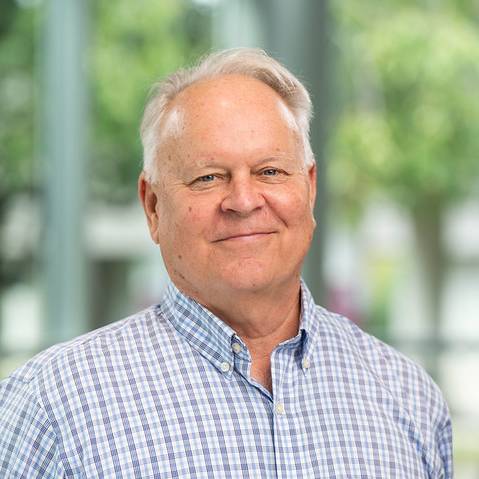 Dr. Frank Hutchins is Professor of Anthropology at Bellarmine. He earned his B.A. from the University
of Kentucky, his M.A. from the Patterson School of Diplomacy at UK, and his Ph.D.
in Cultural Anthropology from the University of Wisconsin-Madison. His research focuses
on cultural change among indigenous peoples in the Amazonian and Andean regions of
Ecuador.
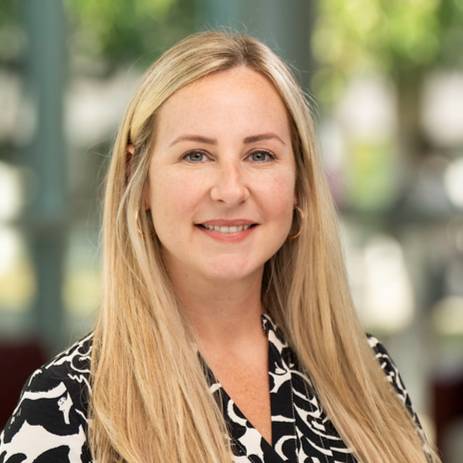 Dr. Ainsley Lambert-Swain is Associate Professor of Sociology at Bellarmine. She earned
her M.A. in Sociology from Morehead State University and her Ph.D. in Sociology from
the University of Cincinnati. Her research examines race and racism in the United
States, with particular attention to how broader systems of racial inequality shape
identity, interpersonal relationships, and experiences.
Here's what they had to say about the Sociology & Anthropology major:
Q: How would you describe the learning environment at Bellarmine, and what influence does that have on a student’s experience in the Sociology & Anthropology program?
A: Sociology and Anthropology are part of the same academic unit as Criminal Justice Studies, with close connections among the three disciplines through elective courses and faculty advising. Our faculty frequently collaborate and discuss student-related matters, allowing us to tailor our teaching and advising to individual student needs. We are deeply committed to student success, and our majors receive considerable individual attention. For high-achieving students, this often includes support for research projects and the development of their scholarship, including travel to academic conferences. Students who encounter academic or personal challenges can also rely on our faculty support to help them manage their coursework and make progress toward their degrees.
Q: How are students in this program supported by faculty throughout their course of study?
A: Advising is an important part of our program. We begin working with students who have declared our major at the start of their sophomore year, or earlier if they prefer. We encourage students to develop research projects that can be presented at conferences or included on their resumes as evidence of advanced research experience. Beyond helping students plan their course schedules, our faculty connect them with internship opportunities, advise them on postgraduate plans, and help them identify opportunities to develop their interests. We also gladly work with students who may need flexibility at various points in their academic journeys due to personal circumstances.
Q: How does a Bellarmine Sociology & Anthropology degree prepare students for life after college?
A: We strongly encourage internships and experiential learning, which allow students to "test drive" career ideas and potentially establish professional networks that can lead to employment opportunities or references for graduate school. Our courses help students understand the complex issues we face as a society and recognize their responsibilities to the communities in which they live, learn, and work. In keeping with the university's mission, we strive to develop the whole student by encouraging them to think about living a life of purpose and using the knowledge and skills gained through our program to lead and serve in their communities, whether through their careers or in other ways.
Q: What would you say to a prospective student considering earning a Sociology & Anthropology degree at Bellarmine?
A: Consider real-world issues and imagine developing ideas and passions that can help address them. This can be empowering, fostering a sense of confidence that creative solutions are possible and that even the most marginalized groups can be supported. Whether or not one envisions a career in the social sciences, this approach offers a constructive strategy for life.
Visit the Sociology & Anthropology program page for more information including program highlights, career opportunities, and contact information if you’d like to get in touch with the department.