What does the Biology program offer?
The Biology major at Bellarmine offers a contemporary curriculum that familiarizes students with both the principles and practices of the biological sciences. Bellarmine offers a bachelor of science degree in Biology with two distinct tracks designed to support students' personal academic and career goals. The Pre-Professional track is designed to prepare students for application to professional or graduate schools, such as medical school, dental school, veterinary school, or physical therapy school. The Organismal track is a broader exposure to the wider world of Biology preparing students to enter the workforce with a well-rounded scientific understanding of the living world around us.
What makes Bellarmine's Biology program stand out?
With small class sizes, Biology students get to know professors as they advance through the program. Along the way, students build their technical, communication, and critical thinking skills to be conversant across a range of scientific disciplines. Students also have opportunities to participate in research with faculty, pursue study abroad opportunities, and take annual marine biology field courses in the Bahamas and Belize.
The Student Perspective
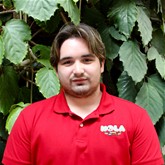 Alex Leyva Serrano is a sophomore Honors student studying Biology on the pre-med track. As a Pioneer Scholars mentor he helps first-generation college students acclimate to life at Bellarmine. He is also the outreach coordinator for the Hispanic Organization and Latino Alliance (HOLA) and is a trip leader for Alternative Spring Break. After Bellarmine, Leyva plans to attend medical school to pursue oncology.
Here’s what Leyva had to say about his experience in Bellarmine’s Biology program:
Q: How does your experience in this program help you prepare for life after Bellarmine?
ALS: Well, professionally—and this is something that is characteristic to Bellarmine—in the Biology program they have hands-on experience. They have the theory in the classroom, but at the same time you’re in the lab learning the real techniques that you're going to need once you get out of Bellarmine and get into your field.
Q: What about the Biology program so far has stood out to you?
ALS: The professors are really good at what they do. What I like the most about it is that you have a connection with the professors and they want to help you. You will be learning and at the same time you will be connecting with your professor, and that's going to help you reach the place you want to be.
Q: What does having a small student-to-faculty ratio mean for you in the pre-med track?
ALS: That means I'm going to be supported through the whole process. It's not going to be just like one faculty member to 300 students trying to get into the same med school. It's going to be you and your faculty advisor and your professors trying to reach the place where you want to be. That's something that is really nice about the Biology program here, because you will not be feeling alone—you're going to be supported the whole process. I know Biology is hard, but with the help of the professors you can reach your goals.
Q: Have you found the pre-med program here to be good preparation for applying to med school?
ALS: Yes. I have friends in other universities and we have compared everything I'm doing here at Bellarmine, and they tell me that we have more advanced academic studies than their colleges and universities. So that's something that I really find nice, because that means we're going to be more prepared than other students from other institutions once we go to our fields and med school. The preparation that you get here will help you in the institution that you go to after Bellarmine.
Q: Bellarmine is a liberal arts school, so in addition to your pre-med studies you're also required to take a lot of courses outside of Biology. What has that experience been like for you?
ALS: It has definitely taught me a lot of things. For example, I was taking Intro to Philosophy, and in that class I wasn't only learning about philosophers and all of that, I was also learning about ethics and things that are going to be helpful in my field of study and definitely my career, because working in a hospital is not just trying to help patients. It's also being there for them and having an ethical professionalism for them. You're not just learning how to be a scientist or a doctor. You're also learning how to be a competent citizen that will help people outside of your field and inside of your field.
Q: How would you describe the learning environment at Bellarmine?
ALS: Having a small classroom helps us not be scared of asking questions and being in contact with the faculty. It's not like compared to other schools where you have like 300 people in a classroom and you think if I ask this question people are going to think it’s dumb. No, it's not going to be dumb, because you’re only in the classroom with 20 people and maybe most of them will have the same questions. I think that's something that really helps students stand out and say, “Hey, I have a question. I need help with this.”
Q: What are your relationships like with fellow students in this major?
ALS: The difficulty of biology and the subjects you have to learn for this program makes you unite with other students. For example, most of us do study sessions before our exams. It's like we are a little unified group of people trying to go through the same course to try to reach the same goals. And having other people going through the same thing helps you to learn more easily.
Q: You are a lab assistant and are also involved with HOLA and Alternative Spring Break. What do those organizations do on campus?
ALS: HOLA is the Hispanic Organization and Latino Alliance. I’m Hispanic and I feel a connection with that organization. Being able to support my own community in my own university is rewarding for me because that means I'm supporting people that need my help, and being able to share some of my culture with others who may not know anything about it is also a rewarding experience.
Q: What is Alternative Spring Break?
ALS: Alternative Spring Break is a program that organizes three trips every spring semester. We go to three different states, three different cities [to help address] some societal issues that they have. This semester we're going to Cleveland, Ohio, with a topic in access to healthcare. That's the one that I'm leading this semester. There's another trip to Nashville, Tennessee, where they will be addressing food insecurity, and Flint, Michigan, with [a focus on] environmental justice.
I’m one of the trip leaders. We get to plan all the activities that we're going to do, we get to be in contact with the organizations in the city that we're going to be helping with, and we get to plan all the fun stuff that will happen, all the reflections that we will have during the trip and all of that.
Q: And what about your work as a lab assistant?
ALS: That's a position they have in the Student Success Center. The chemistry lab can be hard, especially for first-year students, because chemistry is hard, I'm not going to lie. [The Student Success Center has] a tutoring lab that can help students learn the skills they need to succeed in the lab. I work alongside an instructor in the lab helping students gain those skills and the knowledge they need. I host a review session every week where we go through the pre-labs they have, the post-lab—which most of the times are calculations they have to do in order to complete the lab—and we go through the entire procedure for next lab so they also prepare to face the challenges they can face in the chemistry lab.
Q: What would you say to a prospective student who is considering studying Biology at Bellarmine?
ALS: I will definitely say that it is worth it. You're going to learn a lot of things and not just material-wise—also for your personal life. Something they should definitely know is they are going to be learning a lot of stuff that probably they think they know, but they will go more deep into details on. And that's something nice about studying biology, because you will always learn something new.
Q: Do you feel like your experience in the Biology program at Bellarmine has helped you find a purpose or calling for life after college?
ALS: Absolutely. At the beginning, I didn't want to go for oncology. I wanted to go for anesthesiology. However, after learning about most of the cancer stuff in my biology classes I decided that no, that was my calling, that was my purpose: helping people with cancer.
The Faculty Perspective
 Dr. Roberta Challener is an associate professor of Biology. Dr. Challener says the Biology department at Bellarmine strives to provide an enriching educational environment that comprehensively prepares students for the biological professional world. To aid in this approach, most courses have labs where students can hone their technical skills while developing their critical thinking skills through experiential learning and research.
“Science is best learned by engaging activities, and in the Biology department students have the opportunity to do individual research projects under the mentorship of the faculty that teach their classes. For example, 100% of our students engage in novel research in their Genetics course.”
Faculty mentorship plays a big role in student success. With small class sizes, students get to know their professors on a personal level, making it easy for them to further their studies beyond the classroom. Challener says this supportive environment fosters student exploration of the major while building confidence in their knowledge and scientific skills.
“Faculty typically have an ‘open door’ policy where students are encouraged to come and learn more about the work that faculty do and establish meaningful relationships that support students’ pathways towards academic and career success,” Challener says. “We hold individual advising meetings each semester with students to ensure they are successful in reaching their goals, help them discern their purpose, and counsel them on their career options.”
This approach makes the Biology program a holistic, supportive environment that is dedicated to helping students navigate their post-graduation and professional goals. Challener says this approach is a recipe for success—for example, Bellarmine’s Biology graduates have a 15% greater likelihood of matriculating to medical school than the national average, thanks in part to faculty involvement and a well-rounded education.
“Students are exposed to a wide variety of faculty interests, from botany, marine biology, evolution, and anatomy, to cellular, molecular, and microbiology. We help develop your critical thinking skills and a sense of resilience, two aspects that are required to be successful beyond your undergraduate career. We care deeply about our students and enjoy seeing students succeed in achieving their goals.”
Visit the Biology program page for more information including program highlights, career opportunities, and contact information if you’d like to get in touch with the department.