What is Biochemistry and Molecular Biology?
Biochemistry and Molecular Biology is an interdisciplinary field that studies life processes at a cellular and molecular level. Bellarmine’s program is designed to introduce the fundamental knowledge by concept-based learning and to stimulate creative thinking and effective problem-solving through scientific experimentation.
The program requires two years of chemistry, one year of physics, one year of math, and one year of biology before embarking into the upper-level biochemistry courses during the junior and senior years.
What makes Bellarmine’s approach to Biochemistry and Molecular Biology stand out?
The Biochemistry and Molecular Biology program at Bellarmine retains the fundamental goals of a liberal arts education while allowing students to immerse their studies in the sciences. Our faculty in both Biology and Chemistry are engaged in active research projects involving undergraduate students and our students attend national meetings every year to present their work. Student’s have access to an impressive array of instruments in our Norton Health Science Center starting in their first year.
In addition to extensive study abroad options—students in this major have taken summer courses in Prague, participated in research projects in Marburg, Germany, and studied for a semester at Curtin University in Perth, Australia—we also encourage our students to apply to undergraduate summer research programs all over the United States. Students are eligible for these opportunities during their first, second, and third years. In these programs, students work for 8-10 weeks in the summer doing research in laboratory settings. Many of these include a salary and housing accommodations. These are excellent opportunities to access cutting-edge techniques and experience different approaches to research.
The Student Perspective
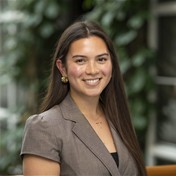 Joy Lefevers is a senior studying Biochemistry and Molecular Biology with a minor in Psychology. She is the president of the Multicultural Association of Pre-Health Students, president of the Asian and Asian American Student Union, and vice president of Belonging and Accountable Leadership for Student Government Association. Lefevers recently completed a summer research program studying genetics that lead to congenital blindness.
Here's what Lefevers had to say about her experience in Bellarmine’s Biochemistry and Molecular Biology program:
Q: What made you want to study Biochemistry and Molecular Biology?
JL: In high school I took AP Biology and I really enjoyed it. Bellarmine ended up giving me a lot of financial aid and I applied Biochemistry because it looked the most interesting to me. I was also super interested in research and Bellarmine had a really low student-to-faculty ratio. I wanted to make sure that I was somewhere that I could have close relations with my faculty because I knew that I wanted to get into research.
Q: Do you have an idea of what you want to do with this degree after Bellarmine?
JL: I am in between going to medical school and pursuing graduate school for research. I care a lot about social justice and health equity, and so whatever I do I want that to be a part of my career. Bellarmine’s been a good place for me to exercise both of those parts of myself, and I think those intersect really well in medicine and public health.
Q: How has your experience in this program helped you prepare for life after Bellarmine?
JL: I've had incredible mentors since I've been here that have tried to help home in on what I want to do professionally, but also supported me in the work that I've done in and outside of Bellarmine since I've been here and really tried to foster that research piece and make sure that I have every opportunity. All of the [research programs] that I've done during the summer, those were sent to me by a professor who recommended me for that experience. I basically went into one of my professor’s offices and was like, “I don't know what I want to do with my life and the time is now,” and they recommended me for [the genetics research program] and it was incredibly transformative. It's the thing that I'm the most proud of in my life, the work that I did there.
And [those opportunities happened] because not only were [my professors] incredible mentors and facilitators in the classroom, they took the time to know me as a person and say, “Hey, I think this would be a transformative experience for you,” or, “Hey, let's continue to foster this interest that you have.”
Q: What about this program has stood out to you?
JL: Two things. One being that if you are interested in the human health side of biochemistry, I think Bellarmine is a perfect place to foster that interest because all the classes that are required are prerequisites for professional school. At the same time, a lot of the higher-level biochemistry classes give you the opportunity to make the class what you want it to be. That's unique because higher-level biochemistry classes can be very difficult, but at Bellarmine they give you the opportunity and flexibility to make that class what you need it to be. I'm in a Physical Biochemistry class right now and all our projects are built around what we want the class to be. After every class, we have the opportunity to say, “I was really interested in this” or “I wasn't interested in this,” and the professor takes that into account and we're kind of leading the direction the class goes in. And then the last biochemistry class that you take is a research project that's completely yours. It's incredible because I have all this research experience that I now get to continue on my own in a different way, which is really fun.
And then the second thing: The professors in the Biochemistry department are incredible. Dr. Chaurasia and Dr. Krzysiak, they're both research superstars and they want to mentor students. That's their number one priority. Dr. Chaurasia gives so many opportunities to interact with her in different ways, and she encourages students to come to office hours. And then Dr. K really prioritizes student success, and she understands what your university life is like. As funny as it sounds, she tries to make her class as minimally stressful as possible, and she really just wants you to engage with the content and know what you need to know to be successful. They just want everyone in the class to succeed.
Q: What are the relationships like with your fellow students in this major?
JL: In my upper-level biochemistry class right now there are five of us. We all work together on all the group projects. We have been through all the Biochemistry classes together and we all are super supportive of each other. Some of us are applying to graduate and professional school right now, and I've read some of their application materials and given them feedback in different ways, and some of them have read everything that I have ever written to apply to any program that I've applied to. So, we’re all close. Regardless of how friendly we are outside of the classroom, within the classroom we know each other's strengths and we help each other out every day. There's only five of us at this point, and we'll have our 400-level this semester and we'll have our senior one next semester and graduate together. So, it’s been fun.
Q: Are you involved in any extracurricular activities associated with this major?
JL: I'm the president of our Multicultural Association of Pre-Health Students (MAPS), and it supports students that are underrepresented in different health care fields and research and professional fields. Last year I had a health care banquet where students could network in a super low-stakes environment and several of my professors helped me plan it, helped me get connections with people in Louisville, and then came to the banquet and networked with students in that way. [My professors] consistently tell me in any programming that I have, like for student government or for AAASU or for MAPS, like, “Hey, remember me, I want to help.” That has really given me the confidence to pursue all of the leadership opportunities that I have, and then those have helped me become as confident as I am in myself and in the work that I want to do. Regardless if that's getting into and going to medical school or pursuing social justice work, they've really helped instill the confidence in me that I'm capable of doing that.
Q: What would you say to a prospective student who's interested in studying Biochemistry and Molecular Biology?
JL: [This program has] given me a lot of direction and guidance, taking all the separate interests that I had coming into Bellarmine. When you're a freshman in college, you want to change the world. They've helped kind of narrow that and say, this is what you're passionate about and this is what you care about. That's given me direction and guidance through mentorship and through prioritization of experience and relationships with people and networks and connections.
I think that Bellarmine is a really good place to do really hard things, particularly our Biochemistry department, because there was no time throughout my Bellarmine career that I felt like I'd been thrown into the deep end with nothing. They don't throw you into the deep end and have no support for you in any capacity. So, I recommend this to people who are anxious to pursue Biochem for a variety of different reasons. Because not everyone has access to a high school that was extremely well-funded. I didn't, and so my high school experience might have looked different than other people's. But coming into Bellarmine and doing Biochem at Bellarmine, I don't think I was at a disadvantage in any capacity.
The Faculty Perspective
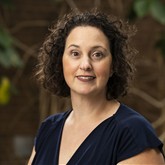 Dr. Amanda Krzysiak, or Dr. K as she is known by her students, is an associate professor of Chemistry. Her background involves academic work and research in biochemistry and drug discovery. Prior to arriving at Bellarmine, she completed a research fellowship at Harvard Medical School and Brigham and Women’s Hospital studying and developing a potential target for Alzheimer’s Disease treatment. At Bellarmine, she and her research students are identifying molecules and biological targets for the treatment of cancer.
Dr. Krzysiak says the benefits of pursuing a Biochemistry and Molecular Biology degree at Bellarmine are the opportunity to interact with faculty and to engage in science both in and out of the classroom.
“Science is a practice, and many of our laboratory classes are research-based, giving students the opportunity to ‘do’ science while learning experimental techniques. Additionally, our faculty engage in research, allowing students to experience working on scientific projects outside the classroom.”
Bellarmine’s program offers an early immersion in science, with students engaging with case studies and real-world problems in their first year. As they progress, the program’s hands-on experiences are research-focused and encourage deep critical thinking and problem-solving. Krzysiak says this approach, along with small class sizes, creates a major that students can tailor to their interests.
“Small classes allow for relationships with the professors, and that helps with not only the learning, but also nurturing the desire to learn in the student. The program is also uniquely apt to cater to both pre-med and grad school aspiring students, with room left over to tailor their electives to their needs, whether it be a minor or maybe another major.”
For students interested in pursuing medical school, Krzysiak says Bellarmine’s Biochemistry and Molecular Biology program rigorously prepares students for success on the MCAT. Students also get opportunities to take courses like Gross Anatomy, giving them an advantage in their first year of medical school.
For students interested in pursuing careers in research, Krzysiak says not only will the coursework prepare you, but the opportunity to work one-on-one with faculty doing research will give you the experience you need. Faculty in this program have published multiple papers in the past couple of years with student co-authors, and students frequently get to present their research at national scientific meetings.
No matter what students end up pursuing after graduation, Krzysiak says the learning environment and structure of this program make it a great fit for students wanting to further their education in science.
“If you love learning how the human body works down to the molecular detail, and you are planning a career in medicine, pharmacy, research, or industry, then BMB at Bellarmine is a great fit for you,” Krzysiak says. “Students are going to find a learning environment with a positive attitude. We want our students to reach their fullest potential, so we foster a learning environment where students feel no shame in asking questions and getting help. We do this while inspiring joy in biochemistry as a topic and a passion for science.”
Visit the Biochemistry and Molecular Biology program page for more information including program highlights, career opportunities, and contact information if you’d like to get in touch with the department.