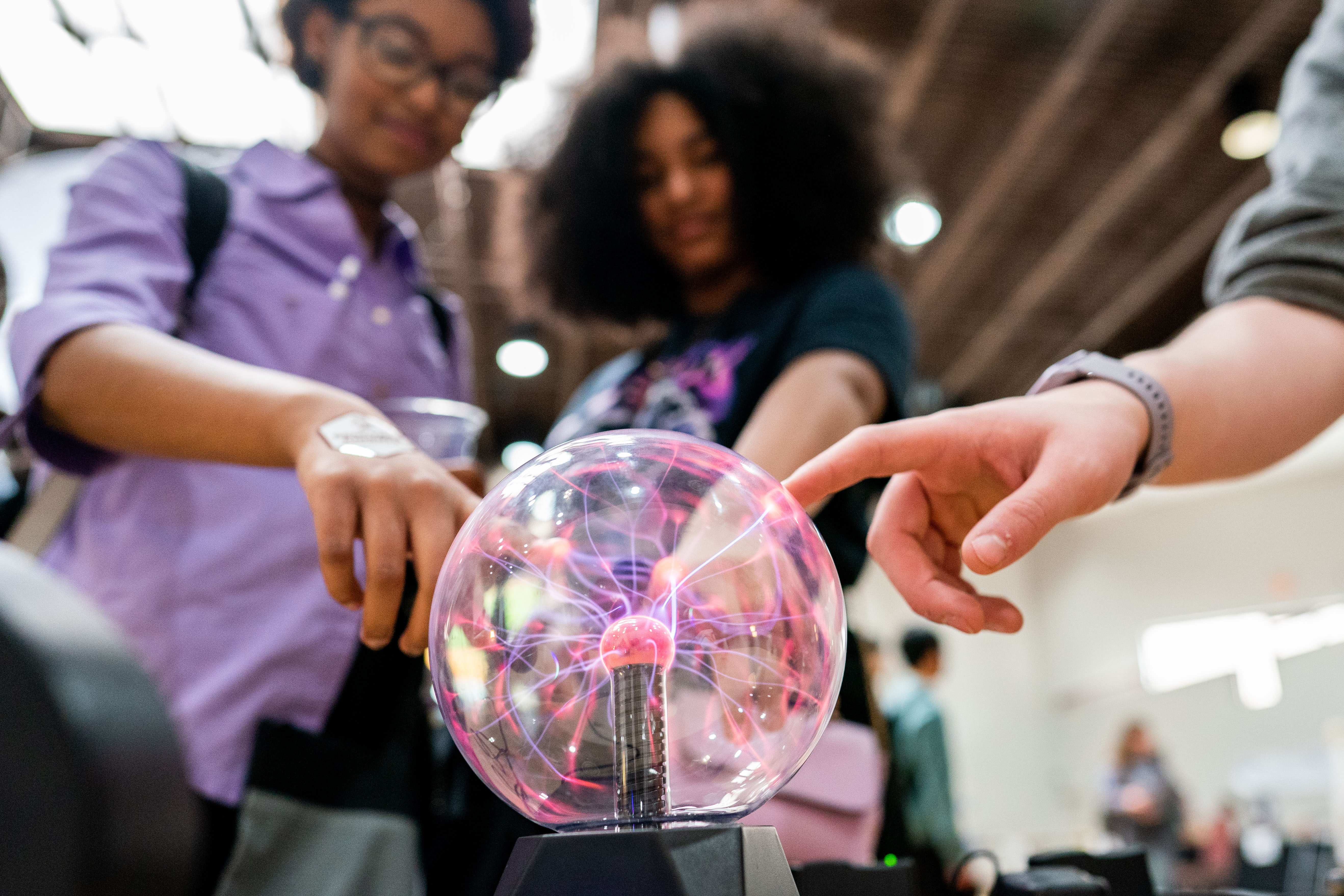
At its best, STEAM education is about developing thinkers and doers—curious, creative, collaborative, empathetic people who can think and act competently across disciplines, resulting in innovations and design solutions that can improve the world. That mission isn't threatened by AI; it is made more urgent by it.
STEAM education matters more in the age of AI for two connected reasons:
- STEAM education is civic preparation. AI excels at optimizing toward a defined goal, but it can't question whether the
goal is worthwhile, imagine fundamentally different goals, or care about the people
affected. STEAM education at its best develops exactly those capacities: creative
problem-solving, empathy, and ethical reasoning in complex and real-world situations
that transcend disciplines. These aren't add-ons to the curriculum but its core, grown
in classrooms with strong teacher-student relationships, collaboration across disciplines
and beyond the classroom, and inquiry-based questions of meaning and methods. STEAM
education that builds critical AI literacy prepares students for democratic participation.
It equips them to inquire about real world issues that demand an integration of science,
mathematics, arts, engineering, and technology alongside civic imagination.
- STEAM inquiries require a human experience. Complex and real-world issues don’t live inside any single subject. STEAM education requires professional learning, not just good intentions. Integrating disciplines well is a distinct pedagogical skill: it means designing authentic, open-ended problems, collaborating with colleagues across subject areas, facilitating inquiry rather than delivering answers, and assessing creativity, collaboration, and reasoning alongside content knowledge. Without that preparation, "integration" tends to collapse into superficial add-ons that deliver none of the deeper benefits, like an art project stapled onto a math unit or simply reading about science topics rather than engaging in science and engineering practices. When educators work across disciplines, learn alongside their students, and treat uncertainty as an invitation rather than a threat, they demonstrate the curiosity, creativity, and collaboration that AI cannot replace.
As AI tools enter classrooms, teachers' most valuable role is in designing experiences, guiding inquiry, and nurturing thinkers and doers. STEAM education's mission of developing curious, creative, collaborative, empathetic people who can improve the world through innovation and design is made more urgent by AI and depends on teachers prepared to teach and think across disciplines.